
Route-aware planning
We consider the meter, building entry, utilities, hardscape, landscaping, and access together.
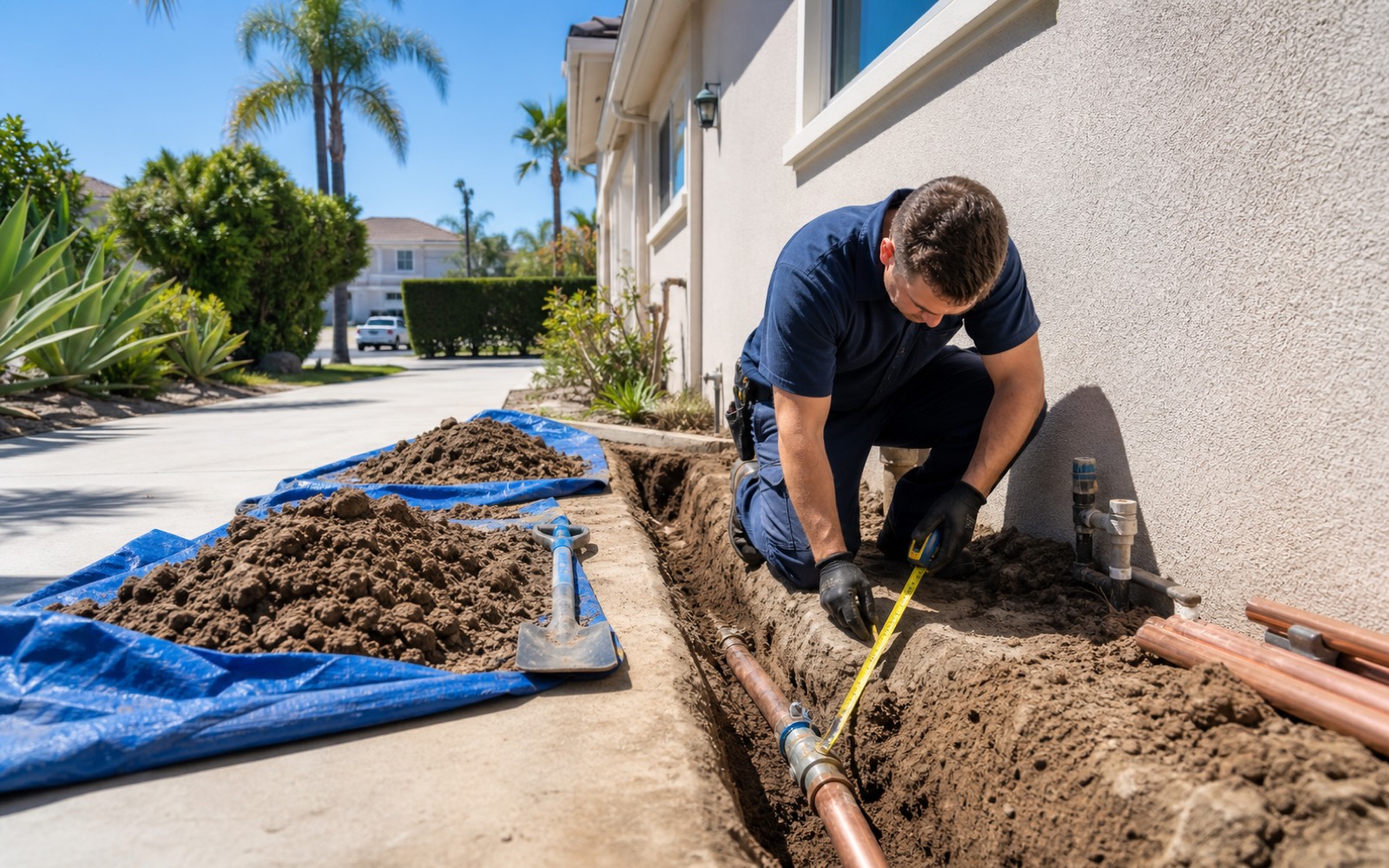
Water-line problems can waste water, reduce pressure, and affect the property around them. We locate the affected path, evaluate access, and define repair or replacement options.
The water service line connects the public supply to the building plumbing. A leak or restriction may appear as an unexplained meter change, damp soil, a pressure drop, or water surfacing far from the failed section. Diagnosis and route planning come before excavation.
Routes in Los Angeles County may pass beneath landscaping, concrete, driveways, or additions. Soil, utility clearances, meter location, property access, and restoration costs can determine whether a spot repair or reroute is more practical.
We consider the meter, building entry, utilities, hardscape, landscaping, and access together.
The proposal explains whether a localized connection or a longer replacement is recommended and why.
Work zones, removed material, protection, and restoration boundaries are identified before digging.
A visible issue can have more than one cause. The inspection and written scope connect the condition to the work being recommended.
Every property is different. The final proposal identifies the exact work areas, access, plumbing components, protection, testing, restoration boundaries, and exclusions.
Discuss My ProjectEach phase reduces uncertainty before the next one begins. Any condition that changes the approved scope should be explained before added work proceeds.
We review meter behavior, pressure, visible moisture, prior repairs, and the likely line route.
Utilities, hardscape, landscaping, excavation, permits, and restoration limits are documented.
The approved section is exposed and replaced or a new path is installed as specified.
The line is pressure-checked, flushed, backfilled, and the agreed surface work is completed.
Material decisions depend on location, existing pipe, manufacturer requirements, code, pressure, access, exposure, and the approved scope.
These answers explain common decision points. Your written proposal controls the final project scope, price, schedule assumptions, and warranty.
A meter that continues moving when fixtures are off, unexplained wet areas, and a building-wide pressure change can be clues. A site evaluation is needed to separate service-line issues from irrigation or interior plumbing.
Sometimes a different access point or route is practical, but site conditions decide. The estimate should compare excavation, rerouting, and restoration rather than promising a no-cut method before inspection.
The project plan should identify required utility-location steps and any owner responsibilities. Excavation should not begin until relevant markings and site information are addressed.
Only the restoration described in the written scope is included. Concrete, pavers, irrigation, planting, and finish matching should each be listed explicitly.
Tell us what is happening, where the property is, and what you would like to accomplish. We will confirm the next step.